What do Muslims and Christians believe differently about Man?

(Third in a series comparing the social impact of theological differences between Christianity and Islam)

theology-of-manIn my last post, I compared Muslim and Christian beliefs about tawhid and trinity. I mentioned that tawhid had implications for the nature of man as well as the nature of god. Tahwid means not only that there is one God, but also that nothing in creation can be associated with god and that god cannot associate himself with anything in creation. It means that the incarnation of God in Jesus Christ is metaphysically impossible for the Muslim god. It also means that there can be no image of god in human beings.

Since the Christian God is a trinity with eternal relational moral attributes like integrity and love, when God bestows those attributes upon part of his creation, then that part of creation becomes “made in the image of God.” But the Muslim god, as a singularity without eternal relational attributes, cannot bestow moral attributes upon any creatures as any portion of his own nature.
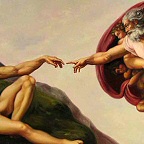
image of God in manIn Christian anthropology, the moral attributes of human beings participate in the infinite and eternal qualities of God. It makes all human life equally sacred and valuable. God is infinite, so likeness of God in mankind is also infinite. Compared to the infinity of God’s likeness in mankind, other differences between people (like gender, race, status, intelligence, disability, or religious affiliation) disappear into relative insignificance when compared to infinity. Compared to infinity, anything else that is not also infinite resolves to zero. Therefore, before God all people are not only equal, but are also infinitely significant because they participate in infinity. If human beings are “made in the image of God,” then laws against discrimination based on race, religion, disability, or gender, are rationally and objectively rooted in the eternal nature of God as opposed to arbitrarily rooted in how things were created.

Muslim treatment of womenBut in Muslim theology of mankind, nothing in man can be anything like god. Therefore, the moral attributes of human beings cannot be anything like the attributes of god. Therefore mankind’s worth and moral attributes are arbitrarily part of creation and not intrinsically part of god and eternity. No part of human essence is either divinely sacred or joined to infinity in a way that by comparison eclipses physical and social differences. Islam does teach that God has created human beings with equal dignity that is higher than the rest of creation (Quran 17:70). However, differences in gender and religious affiliation are legally significant in Islam. A man’s testimony has more weight than a woman’s, and non-Muslims have different status than Muslims in Muslim law. Furthermore,  only non-Muslims have freedom of religion under Muslim law. Non-Muslims are free to convert to any faith they choose, but Muslims are not free to leave Islam.

Because of tahwid, in Islam, human dignity flows arbitrarily from the way that people are created rather than from the innate infinite likeness of God in mankind. As a practical result, human rights vary depending upon physical characteristics, behaviors, and social affiliations.

Because of the trinity, in Christianity, human dignity flows from an innate infinite likeness to God in each person rather than from arbitrarily created characteristics or chosen behaviors and affiliations. As a practical result, human rights are the same for all people whatever their differences or affiliations. Men, women, Muslims, Buddhists, and Christians are all the same before God and the law.

The image of God in man makes people different from everything else that God created, and it results in a divine expectation for people to be stewards of the rest of creation. I will address the implications on caring for creation in my next post.

People become like what they worship, and they relate to one another based upon the way that they relate to God. Gender, race, and interfaith relations are a challenge in all societies, but gender, race, and religious discrimination are bigger problems in Muslim majority societies than in Christian majority ones because of different beliefs about the image of God in man.

Link through the chart to other posts on the social impact of Muslim and Christian theology:

Return to Navigation Chart

What do Muslims and Christians believe differently about God?

(Second in a series comparing the social impact of theological differences between Christianity and Islam)

Based on the thesis that people become like what they worship, and people relate to one another based upon the way that they relate to God, in this blog series I intend to compare and contrast the social impact of Muslim and Christian beliefs about God, man, nature, salvation, end times, and revelation. This entry compares and contrasts the social impact of Muslim and Christian beliefs about God.

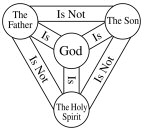
the Christian TrinityThe Christian God is three persons in one essence, while the Muslim god is a single autonomous unity. The English technical term for the three-in-one Christian God is “trinity.” The Arabic technical term for solitary singularity of divine essence is tawhid.

the Muslim TawhidMuslim scholars claim that tawhid is the most important article of Muslim faith and that all other Muslim doctrine springs from it. Tahwid means not only that there is only one God, but also that nothing in creation can be associated with God and that God cannot associate himself with anything in creation. We’ll explore the implications of divine non-association in my next post on the theology of man, but for now let’s consider the implications for society and civic structures if God is a singularity rather than a trinity.

In chapter one of He Is There and He Is Not Silent Francis Schaefer writes,

The Persons of the Trinity communicated with each other and loved each other before the creation of the world…. This is not only an answer to the acute philosophic need of unity in diversity, but of personal unity and diversity. The unity and diversity cannot exist before God or be behind God, because whatever is farthest back is God. But with the doctrine of the Trinity, the unity and diversity is God Himself — three Persons, yet one God. That is what the Trinity is, and nothing less than this

Honor, glory, love, integrity, morality, and truth demand relationships. These moral qualities cannot exist within a singularity. However, these moral qualities can exist in eternity past within a trinity. If God is a trinity, then glory, honor, and love are eternal. That eternity for glory, honor, and love is possible because the persons of the trinity have been glorifying, honoring, and loving each other for eternity. Also, if God is a trinity, then integrity, morality and truth are also eternal. That eternity for moral qualities is possible because the persons of the trinity have been holding each other accountable to standards of integrity, morality, and truth for eternity.

But if God is a singularity, then there are no interpersonal relationships within God. If there are no interpersonal relationships within God, then there is no eternal basis within God for honor, glory, love, integrity, morality, and truth. If there is no basis in eternal reality for God’s glory and honor, then God’s glory and honor are not eternally innate to him but depend on his relationship with creation. Also, if God is a singularity, then God can do nothing to shame himself. If God has no innate honor, then he can never potentially have innate shame. He can only be shamed by his creation. If God can do nothing to potentially shame himself, then his behavior has no moral boundaries. He can lie, cheat, and steal with impunity because God is only accountable to himself. If there are no relationships within God, then God has no accountability.

In Christian society, because God is a trinity, nothing and no one can embarrass or dishonor God. God’s honor and glory are part of his eternal essence and depend on nothing other than God himself. Nothing in creation can ever change or diminish God’s honor and glory — even if God becomes a man and dies a humiliating death on a cross. Only God himself can potentially shame himself, because a trinity has accountability within itself.

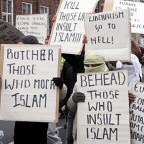
insulting islam shames GodBut in Muslim society, because god is a singularity, the society must guard and protect his glory. Nowhere on earth and at no time in history do we find Christians violently protesting in the streets when people insult God, his prophet, or his holy books. People in Christian societies know that God does not need his honor protected. But Muslims around the world throughout history are paranoid about the glory of their god. “Allah Akhbar,” the Arabic words for “God is Great,” are constantly on their lips. Insulting the prophet receives a death penalty in many Muslim countries. Defiling a Qur’an instigates violent protests and even murders around the world.

People become like what they worship and relate to one another based upon the way that they relate to God. In Christian societies, God’s honor is certain and his integrity is an innate attribute. Christian doctrine holds that God’s integrity constrains his behavior so that he cannot lie. If God were to lie, then he would shame himself. Therefore, in Christian societies, integrity is more important than honor, and society expects people to tell the truth even if it means embarrassing themselves, their families, their business, or their leaders.

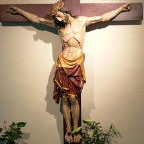
Crucifying Jesus shames himBut the relative esteem for integrity and honor are reversed in Muslim societies. According to Muslim doctrine and according to the Qur’an itself, “Allah is the best deceiver.” In Islam, god’s honor depends upon how creation treats him, and integrity is not an innate part of his eternal essence. Power, as an attribute, can be independent of relationships, and it is the most vaunted attribute of the Muslim god. As a result, in Muslim societies, honor is more desirable than integrity, and people are expected to deceive in order to protect themselves, their families, their businesses, or their leaders from shame. Among Muslims, the notion that God would stoop to become a man and suffer at the hands of men is one of the most offensive blasphemies to comprehend.

Because of tahwid the Muslim god can only be dishonored by his creation, and he cannot dishonor himself. However, because of the trinity the Christian God can only be dishonored by himself and cannot be dishonored by creation. As a result, Christian societies do not worry about protecting God’s honor and care more about truth than honor, but Muslim societies are paranoid about god’s honor and care more about honor than truth.

Link through the chart to other posts on the social impact of Muslim and Christian theology:
Return to Navigation Chart

Are Islam and Christianity different and does it matter?

civic structures and religionThis is the first in a series comparing the social impact of theological differences between Christianity and Islam.

I believe that people become like what they worship, and people relate to one another based upon the way that they relate to God. If religions matter and if religions are different, then different civic structures will emerge from different religions. But popular culture resists information that challenges its prevailing conviction that all religions are basically the same. It sees what it expects, and it overlooks what it doesn’t.

Recent research shows that the religion of “no-religious-affiliation” is the fastest growing religious position in America. This group’s influence on popular thought throughout all of America is stunningly profound. If religion is irrelevant, then all religions are basically the same. And if all religions are basically the same, then different religions do not result in different civic structures, and civic structures become interchangeable between societies that are practicing different religions.

This emerging belief system impacts both secular and Christian institutions. On the secular side, it is the foundation for the failure of peacekeeping efforts in the Middle East and Central Asia. On the Christian side, it undergirds efforts to create a Jesus movement within Islam.

In this series, I will challenge conventional popular wisdom about religion. I will demonstrate that Islam and Christianity are fundamentally different. I will compare and contrast Muslim and Christian beliefs about God (theology), man (anthropology), nature (cosmology), salvation (soteriology), end-times (eschatology), and revelation. I will show how different beliefs result in different values that result in different social behaviors.

On the secular side, Western civic structures are founded in a Judeo-Christian religious heritage. Conversely, Middle Eastern and Central Asian civic structures are founded in a Muslim heritage. Civic structures cannot survive without underlying values that are based upon popular beliefs. Structure for government, justice, education, public works, civil defense, marriage, family, and more must have points of contact with underlying values. Structures functioning in one religious heritage cannot survive inside another without adapting so that they have points of contact in the values based on the beliefs of the other system. Such adaptation is not possible when the people attempting to transplant the structures believe that all religions are basically the same.

On the religious side, not everyone who professes to be a Christian is truly following Jesus and is “saved” according to an Evangelical perspective. Furthermore, some people who call themselves Muslims are actually or secretly following Jesus. As a result, many Evangelicals are embracing the popular notion that Muslims and Christians worship the same God. That leads to religious structures being interchangeable. It means that Muslims can follow Jesus and remain in Islam while Christians can worship in Mosques and celebrate Muslim holidays without committing idolatry. But if the Muslim and Christian gods are different, then worshipping in a Mosque would be idolatry for someone following Jesus, and worshipping in a church would be idolatry for someone following Muhammad.

Follow this series and then decide for yourself. Can Western civic structures bring peace and prosperity to the world of Islam? Can Muslims follow Jesus and remain inside Islam?

Link through the chart to other posts on the social impact of Muslim and Christian theology:
Return to Navigation Chart

Book Review: Through Mid-East Eyes – Illuminating Mid-East Service and Bible

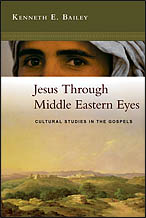
bailey_coverJesus lived and taught where most military men and women are serving. Kenneth Bailey’s book, Jesus Through Middle Eastern Eyes: Cultural Studies in the Gospels, reveals what Jesus’ life and teaching meant to his Middle Eastern audience. His impact on them was often quite different than his impact on Europeans and Americans today.



For example, according to Rolland Muller in his book The Messenger, The Message, and The Community (p. 237), parents in the Middle East today still indoctrinate their children using a story with a moral about how it is more honorable to say “yes” to your father in public even if you plan not to do what he says, than to say “no” in public and obey him later. Compare this to the parable Jesus tells that is recorded in Matthew 21:28-32. In that story, one son tells his father he will work in the vineyard but does not, and the other son tells his father he won’t work in the vineyard but does. By commending the son who publicly humiliated his father but privately obeyed him, Jesus shocks his audience in ways that we cannot comprehend.

Jesus taught in Aramaic, not Greek. Yet the original New Testament is Greek. Kenneth Bailey has spent 40 years living, studying, and teaching in Egypt, Lebanon, Jerusalem, and Cyprus. He reads ancient New Testament translations and commentaries in Aramaic. From the Greek he can reconstruct the probable words that Jesus actually spoke and estimate the understanding his audience most likely had. His insight into the teaching, context, and drama of Jesus outstrips that of the finest Bible scholars who study texts and traditions in mainly Hebrew, Greek, and Latin.

Service in the Middle East brings sparkle to the Bible through reading this book, and reading this book adds freshness to serving in the Middle East.