Three Reactions to Terrorism and “Islamic State” Resurgence

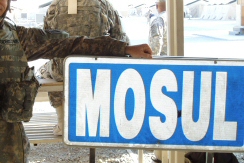
US Soldiers in IraqBoko Haram, the Islamic State, Hamas, and other fundamentalist Muslim entities calculate their terrorism to inspire fear. Fear clouds judgement. Most people react in one of two ways, but a few people pursue a more productive third option. The three reactions are:

  1. Flight (includes Freeze)
  2. Fight
  3. Spiritual Engagement

1. Flight (& Freeze) – “Islam and Muslims are both good”

The “flight” reaction takes the form of denial. It misses how terrorism transcends politics and economics. It can’t see differences between Muslim fundamentalists and other kinds of fundamentalists. Most people in the US State Department, in academia, in the entertainment industry, in the global news media, and in the current American presidential administration are slaves to this emotional reaction. People in “flight” from their fear of terrorism behave according to a conviction that “Islam and Muslims are both equally essentially good.” A great blog by Mark Durie on theological illiteracy shows how their proposed political, economic, and sometimes military “solutions” flee from theological realities and end up undermining security. For example, the popular mantra that the Islamic State does not represent a form of Islam energizes the radicals and absolves the moderates of responsibility for defeating them.

2. Fight  – “Islam and Muslims are both bad”

The “fight” reaction advocates a multi-faceted counter-offensive against Muslims who are trying to “take over the world.” Brigitte Gabriel is a spokesperson for this approach. People in “fight” mode behave according to a conviction that “Islam and Muslims are both equally dangerous.” They don’t just strive to diminish Islam, but many of their proposed “solutions” would end up oppressing Muslims. For example, suspending Muslim immigration or preventing the building of mosques infringes on religious liberties.

3. Spiritual Engagement  – “Islam is bad but not Muslims”

A third reaction is neither “fight” nor “flight” but an engagement based upon an understanding of Islam and compassion for Muslims. This balance of judgement and mercy transcends normal reactions. Evangelical outreaches to Muslims like “Jesus for Muslims,” “Act Beyond,” “Crescent Project,” “COMMA Network,” and “Adopt a Terrorist For Prayer” behave according to a conviction that “Islam is bad but not Muslims.” They understand how even the “peaceful” moderate Muslim majority is in bondage to an oppressive theology. That theology, even when peacefully expressed, opposes freedom of conscience, freedom of speech, and freedom for women at its fundamental core. It is deeply rooted in places like Saudi Arabia and Pakistan that are beyond the reach of either military or civic interventions. Therefore, the lasting solution to acts of terror in the name of Islam is not military, economic, or political, but theological. Spiritual changes precede material ones. Meeting the suicidal zeal for an Islamic state with a comparable Pauline zeal for evangelism among Muslims will facilitate those spiritual changes.

Post Script

These three responses, explained above, are not exclusive or exhaustive, and they are descriptive rather than prescriptive. My recommendation of Spiritual Engagement as “a” pathway to “lasting solution” does not exclude supporting secular (military, political, and economic) engagements that are theologically literate and help to free Muslims from Islam. However, secular engagements without spiritual ones don’t address underlying causes and won’t likely create lasting change.
Fort Hood Shooter Elicits Enabling Responses

Nidal Hasan’s killing spree at Ft. Hood along with most responses from secular and Muslim institutions underscore a thesis posted at http://www.atfp.org/articles/9 that violence done in the name of Islam is like alcoholism in a codependent dysfunctional family. Both systems feature excuses, denial, and enabling behaviors of people inside and outside of the systems.

Neither justice nor excuses for violence done in the name of Islam are deterring it. Underlying enabling systems and attitudes must be addressed and changed. If public opinion starts deriding this kind of violence done in the name of Islam as a disease like alcoholism, then Muslims themselves may work harder to address it than they are working to excuse it.

Nothing impacts alcoholics and their dysfunctional families like a reformed alcoholic, and nothing changes an alcoholic better than prayer. Similarly, no one can preach better against violence done in the name of Islam than a reformed terrorist, and nothing can change these deranged people better than prayer. Pray for the miracle of seemingly impossible changes in these desperate lives and their dysfunctional system.

Ending Terrorism is Like Healing Alcoholism

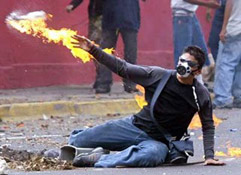
molotov_throwerBrother Thomas, who founded Adopt a Terrorist For Prayer, thinks that the sociology of violence in the name of Islam is a lot like alcohol addiction in a dysfunctional codependent family. He says the symptoms are all in nearly perfect one-to-one correspondence. As a result, he says that ending terrorism as a viable option to many for “defending Islam” is a lot like curing alcoholism. You may read the full article HERE.

Adopt A Terrorist For Prayer Upgrades

Terrorists want to attack America, and Brother Thomas Bruce wants you to pray for them. His web site is ATFP.org. A-T-F-P stands for “Adopt a Terrorist For Prayer.” Those letters stand for “Anti-Terrorism Force Protection” in Defense Department terminology and on the equivalent .net and .com web sites.

Brother Thomas believes the best defense is a good offense. He asserts that the best way to overcome terrorists is to pray for them and their sponsors.

For the past year, ATFP’s web site has featured a gallery with brief biographies of the FBI’s most wanted terrorists and the State Department’s identified terrorism sponsors. It has also featured space for visitors to post prayers for those people.

Brother Thomas recently returned from a year of duty with the Army Reserves in Iraq, and he has updated the web site. Now visitors can register and create a profile so that the number of people committed to praying for each featured terrorist or terrorism sponsor can be counted and posted.

For the past year, Brother Thomas has been in harm’s way at the front line of America’s national response to terrorism. He believes that through this web site everyone can get on the front line of a Christian response.

He believes that the struggle against violence done in the name of Islam is primarily spiritual. Therefore, he believes that defeating such religiously inspired violence requires spiritual engagement. He says, “The intent of terrorists is to inspire terror.” And he says, “According to Jesus, the antidote to fear is love.”

On the home page Brother Thomas writes, “When we hate, we are reactive victims. When we love we seize the initiative. Love for country helps soldiers to risk their lives. Love for children enables parents to discipline them without being intimidated. Love for us took Jesus to the cross. Love for enemies will give courage to face, overcome, and transform them and the environment that breeds them.”

Brother Thomas asserts that the Apostle Paul was once a religiously inspired terrorist. He notes that Stephen was one of his first victims. According to the Bible, as he was dying from Paul’s orchestrated stoning, Stephen prayed, “Lord, do not hold this sin against them.” Later, Paul met Jesus in a vision and repented. He became as zealous for the gospel of salvation in Jesus Christ as he had been against it.

Brother Thomas asks, “Can we pray today like Stephen prayed then?” And he wonders, “Would Paul have seen Jesus if Stephen hadn’t prayed?”

So why the alias “Thomas Bruce?” Brother Thomas identifies with the Apostle Thomas who gets slandered for his skepticism about Jesus’ resurrection. He also notes that of all of Jesus’ closest followers, only Thomas and the women were brave enough to be out on the streets of Jerusalem when afraid for their lives following Jesus’ crucifixion. And what about the pseudo-surname Bruce? Brother Thomas says, “Lots of courageous famous characters have the name Bruce. Heck, Chuck Norris himself probably wishes it’d been his.”

Book Review: Three Revolutions in Islam

With Inside the Revolution Joel Rosenberg brings the color and excitement of his best-selling novels to a scholarly analysis of the Global War on Terror (now called “overseas contingency operations”). He describes, from an Evangelical perspective, how the world is not so much consumed by a “Clash of Civilizations” as it is affected by clashing movements within the Muslim world. For Joel, Osama Bin Laden, Thomas Jefferson, and Jesus Christ are icons representing the three competing revolutionary ideologies. Joel’s work captures the situation’s complexity and gravity better than any other work in print today.