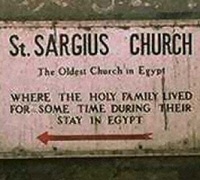
 As a tidal wave for democracy washes across the Middle East, how might Middle Eastern democracies look?
In 2003, while advocating for change in Iraq, President Bush asked, “Are the peoples of the Middle East somehow beyond the reach of liberty? Are they never to know freedom?” In his 2009 Cairo speech, President Obama underscored his “commitment . . . to governments that reflect the will of the people.” He claimed, “But this much is clear: governments that protect these rights are ultimately more stable, successful and secure.”
Most American foreign policy experts believe that democracies will not fight each other, so, therefore, spreading democracy spreads peace. However, democracy may not be good for everybody. American democracy did not help black slaves or Native Americans for at least a hundred years. Barack Obama may have been thinking of this history when he clarified at Cairo, “And we will welcome all elected, peaceful governments – provided they govern with respect for all their people.”
How might democracy in a place like Egypt look for all the people?
A Pew Opinion Survey published in December 2010 found that 82 percent of Muslim Egyptians favor stoning for adultery, 77 percent favor severing limbs for theft, and 84 percent favor death for apostasy (leaving Islam).
“How can this be?” asked a friend. “We think of Egypt as being more educated and modern.” We also believe that only a tiny fraction of Muslims are radical. How can the vast majority of Muslims in moderate Egypt embrace capital punishment for people who leave Islam?
The obvious answer lies so far outside of American experience that it’s not seriously considered. Islam is a political system as well as a religious one. Leaving Islam is treason. Even in the USA, treason is punishable by death. Popularity of the death penalty for leaving Islam proves that Islam is a political system. Popular support for freedom of conscience and expression in Islam evaporates like popular support for sedition in America. Politics and Islam are functionally the same.
Violence is a tool of the state. America defends and propagates its ideology both at home and abroad with violence. American soldiers in Iraq and in Afghanistan are state instruments for defending and propagating democracy.
Religions become violent when they become political ideologies. That’s why so many Europeans emigrated and founded America. They wanted to be free from the mixing of religion and politics that motivated Crusades and Inquisitions.
Religion without politics is mostly benign. However, government is never without access to violent tools. Atheistic dictators Stalin, Mao, and Pol Pot demonstrate the potential for violence in political systems without religion. The common denominator in nearly all violence is politics.
Today, Americans have lived for so long under a system that separates church and state that they have lost touch with how most of the world still integrates politics and religion. In Indonesia, it is illegal to be an atheist. In China, many pastors are in jail for leading non-approved congregations. In Pakistan, blasphemy – defined as criticizing Mohamed – is a capital offense. Many Americans have so lost touch that they actually blame religion, rather than politics, for more violence.
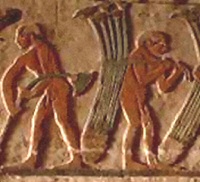 Now back to Egypt. In a country that is 87 percent Muslim, of whom at least 80 percent follow Islam as a political system, consensus will likely implement Muslim faith with civil law.
American history demonstrates how democracy is great for the majority, but not necessarily so great for minorities. Brutality in displacing Native Americans along with slavery and discriminatory segregation underscore this inescapable reality.
In an Egypt under majority rather than dictatorial rule, religious minorities will be like African Americans and Native Americans before the American civil rights movement. Majority rule in Egypt will not be very pretty for non-Muslim minorities. Not until Muslims begin separating their politics and religion.
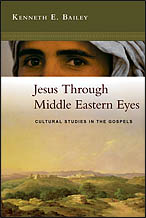 Jesus lived and taught where most military men and women are serving. Kenneth Bailey’s book, Jesus Through Middle Eastern Eyes: Cultural Studies in the Gospels, reveals what Jesus’ life and teaching meant to his Middle Eastern audience. His impact on them was often quite different than his impact on Europeans and Americans today.






 http://www.faithandwar.org
 Mark Durie's Blog
 Military Missions Network
 The Christian Fighter Pilot
 The Navy Christian